Themes · 13 stories
Plague and medical horror stories
Every cure has a ledger. Someone always keeps it.
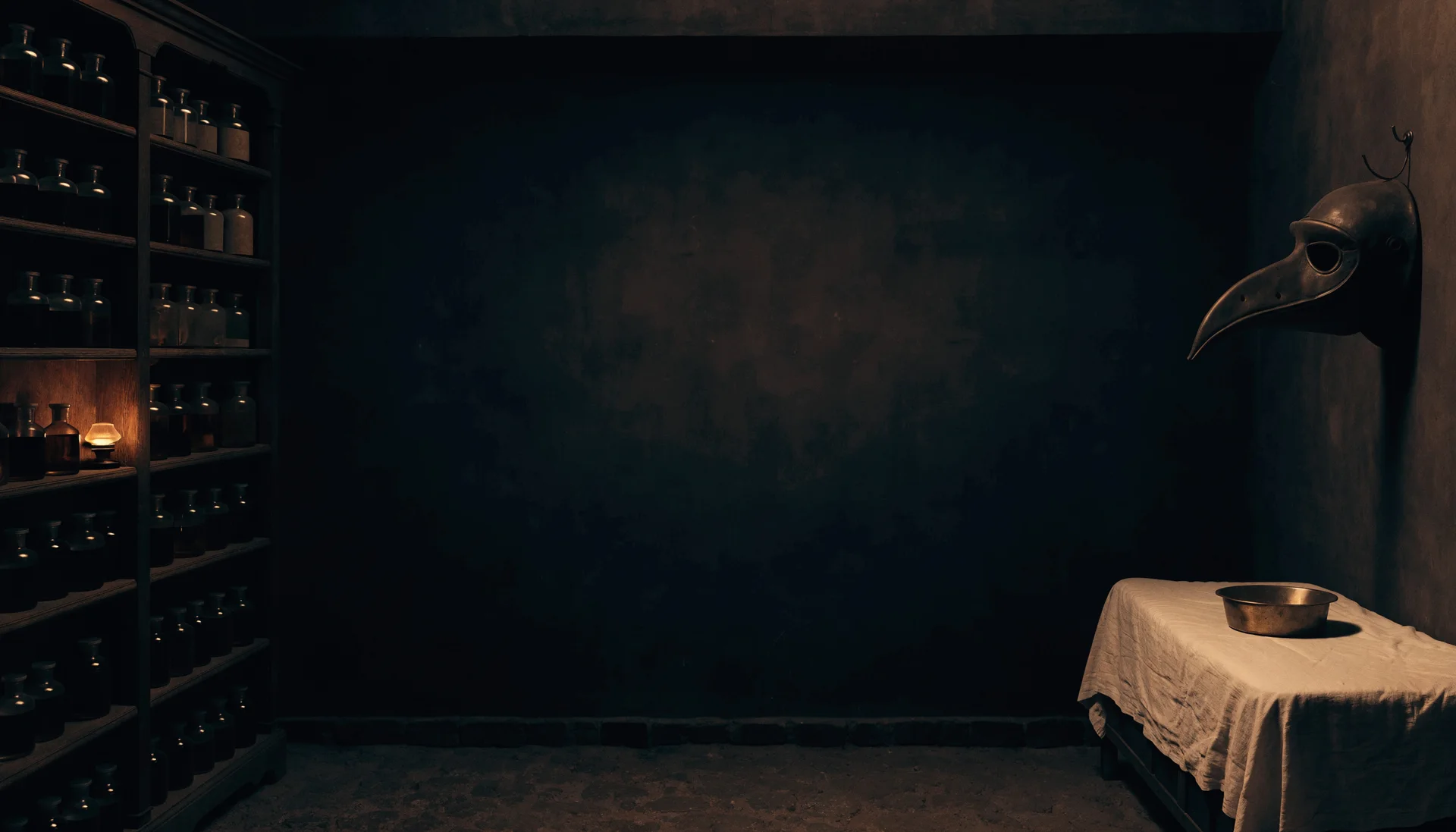
These are medical horror short stories, and plague stories. Some are set in the great epidemics: Leiden in 1635, Amsterdam in the plague summer of 1664, Strasbourg in 1518, when people danced in the streets and could not stop. Others are set in clinics, care homes and colonies, where the treatment is working exactly as planned, according to the schedule.
Medicine is supposed to be the thing that explains what is happening to your body. In these stories it explains too little, or too much.
In The Plague Clerk, a parish clerk writing forty burials a day finds a line in his own hand for a family he spoke to that morning, alive and well. In Sleep Study, a woman paid to sleep in a clinic is shown a recording of herself sitting up in the dark, talking to an empty corner and pausing for the answers. In Acclimatisation, a gene therapy changes a colonist’s body faster than the system will admit.
The old stories fear the sickness. The new ones fear the records kept about it, and the people who keep them.
For more from those plague years, go to By Candlelight. For medicine in the far future, see sci-fi horror.
The stories
Newest first. Each one stands alone.
Lasting Power
A courteous man knocks at Maureen's door in Sheffield with a contract her husband signed in 2014, on the night of her first chemotherapy. Phil has dementia now, Maureen holds his power of attorney, and the man has come to discuss the terms.
Before you go in
- Dementia, and caring for a husband with early-onset Alzheimer's
- Cancer and chemotherapy, in the past
- A bargain with the devil
The Anatomy Lesson
Amsterdam, January 1656. Jacob prepares a hanged thief for the surgeons' public anatomy lesson, the new praelector's first. The body has been dead a day and a half, and it is warm.
Before you go in
- Public dissection of an executed man, described with restraint
- Execution by hanging
- Fear of being buried or opened while alive
- Loss of control over one's own body
The Fiddler of Strasbourg
Strasbourg, 1518. The council pays a fiddler to play for the people who cannot stop dancing, so that the music will wear their fever out. Now he has come to claim his wages, and his bow arm will not keep still.
Before you go in
- Death of a young child from illness, in the past
- Parental guilt and grief
- Bodily suffering: exhaustion, bleeding feet, collapse
The Rattle Watch
Amsterdam, 1664, the plague summer. Klaas Pietersz walks his streets at night calling the hours, and on one street a voice always calls the hour before he does. The houses it passes are marked for the sickness within the week, and it is coming towards his own door.
Before you go in
- An historical epidemic, with deaths of adults and children referred to
- Fear for a pregnant partner
- Sustained dread
Sleep Study
Ruth signs up for a paid sleep study to cover her rent. On the second morning they show her a recording of herself sitting up in the dark, talking to the empty corner of the room, and pausing to listen to the answers.
Before you go in
- Grief and isolation after a parent's death
- Financial hardship and threatened eviction
- Consent given without awareness
- A death referred to, not shown
Semper Augustus
Haarlem, the winter the tulip trade broke. A careful broker notices that the flames in last spring's flowers drew the deaths of the men who owned them, and a buyer in a hood arrives who never haggles.
Before you go in
- Plague, with its symptoms described
- A suicide by hanging, reported
- Death of a teenager
- A character knowingly endangering another for his own safety
Acclimatisation
Soraya is taking the gene therapy that will let her breathe the air of her new world. Her body is changing faster than the schedule says it should, and the colony system insists she is exactly on track.
Before you go in
- Bodily transformation
- Needles and medical procedures
- Loss of bodily autonomy
The Quiet Hours
Night carer Marisol Reyes has one rule on her shift: nobody comes in. Then the residents begin to dress in their best clothes at four in the morning, for a visitor they say she has to sign in.
Before you go in
- Drafted from the text; Tom decides
- Death of elderly care home residents
- Assisted dying themes and a carer complicit in a death
- Untreated pain and neglect in residential care
The Plague Clerk
Leiden, 1635. The parish clerk writes forty plague burials a day, and one morning he finds a line in his own hand for a family he spoke to that morning, alive and well. He scrapes it out. It comes back.
Before you go in
- An historical plague epidemic, and mass death
- The death of an infant is foretold, though it does not happen
- A man chooses a stranger to die in place of a family
Continuity of Self
Nineteen days after the procedure, Lucan Vey's hands have stopped shaking. Then a man with his voice rings from the clinic to tell him whose kitchen he is standing in.
Before you go in
- Terminal degenerative illness and dying in hospice
- Identity replacement and loss of self
- A spouse's concealment and betrayal
Ward C
A probationer nurse in an 1891 county asylum is put on nights on the quiet chronic ward. One patient knows the inside of her family's house, down to the stair that creaks.
Before you go in
- Victorian asylum setting and wrongful confinement
- Implied poisoning of a parent
- A child used, unknowingly, in a death
Farewell Scheduling
The care system on a small colony starts booking farewells for people who have just passed their medicals. The administrator who audits it finds her own name on the list.
Before you go in
- Grief and bereavement, including the death of a child, implied
- Deliberate memory suppression
- A fatal accident, offstage
The Duke Comes in Winter
The winter of 1716 seals a Dutch village under ice, and a stranger arrives wanting to know how many are dead. Hendrik Meijer keeps the parish register. He is certain of his number.
Before you go in
- An historical epidemic, and mass death
- People sealed inside a building and left to die, including children
- A parent complicit in it, witnessed by their child
- The dead deliberately erased from a written record
- Memory loss and unstable identity
Other doors
- 35 storiesPsychological horrorNothing here needs a monster. Only a mind that is certain, and a world that quietly disagrees.
- 9 storiesSci-fi horrorThe future keeps very good records. That is the trouble with it.
Or choose a light to read by.


What readers ask
What is medical horror?
Medical horror is horror set in hospitals, clinics, asylums and sickrooms, or built around disease, treatment and the body. Its fear is the loss of control over your own health to an illness, a doctor or a system. Medicine is supposed to explain what is happening to you. In medical horror it explains too little, or too much.
Are the plague stories historically accurate?
They are invented stories set in real epidemics, such as the Leiden plague of 1635 and the Amsterdam plague of 1663 to 1664. Places, dates and customs like burial registers and night watchmen are drawn from history. The people, and what happens to them, are fiction. Nothing here should be read as a medical record.
What was the dancing plague of 1518?
The dancing plague of 1518 was an outbreak in Strasbourg in which dozens of people, by some accounts many more, danced for days without being able to stop. The city authorities hired musicians, believing more dancing would wear it out. Its cause is still argued over. The Fiddler of Strasbourg is set there.
Are these medical horror stories graphic?
Most rely on dread rather than gore, but some include illness, death, bodily change or medical procedures described plainly. Each story lists its content warnings beneath the title, behind a collapsed "Before you go in" toggle, so you can check before you start. The toggle stays shut unless you open it.