Themes · 14 stories
Dark fantasy short stories
Other worlds, older bargains. The rules are different there, and they are kept.
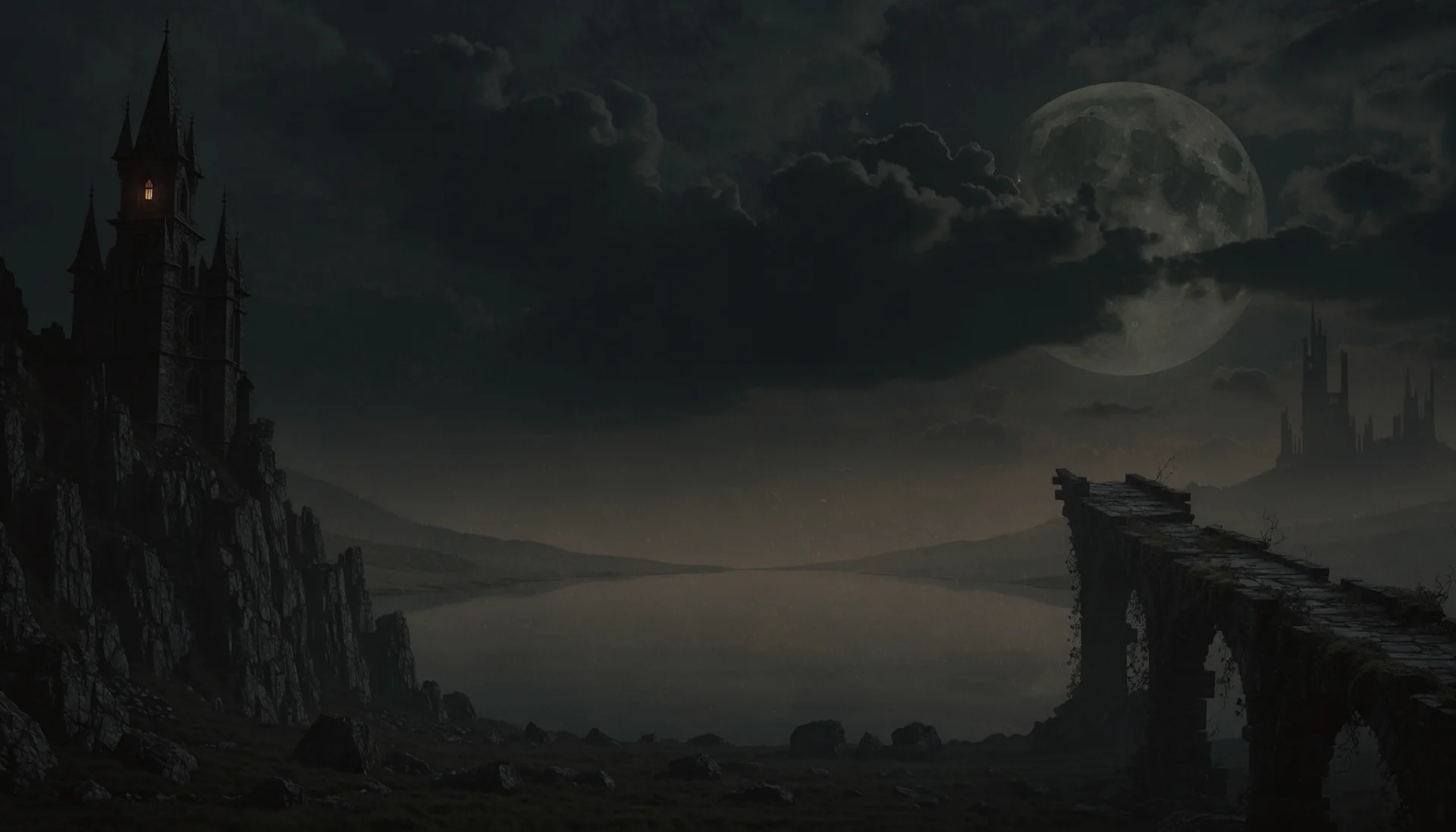
These are dark fantasy short stories. They are set in worlds that never existed, each with its own cities, its own trades and its own laws. A kingdom keeps its old dragons instead of killing them. A city lives on the back of a sleeping leviathan. Debts are paid in dreams.
Dark fantasy takes the furniture of fantasy, the quests and kings and creatures, and turns the lamp down. Nobody here is chosen for glory. They are chosen for something else.
In The Phoenix Keeper, the bird does not rise from its pyre, the city freezes in the long dark, and the council begins to explain what the fire needs. In The Blank on the Map, an apprentice cartographer finds her home valley missing from the new survey, in a hall where what is not mapped is not kept. In Night Streets, a lamplighter in a city that replaces one street every night keeps being given directions to his own front door.
These dark fantasy stories sit on the By Strange Light shelf, beside the far future. The rules differ from one world to the next. The bargains are always worse than they look.
For futures rather than other worlds, see sci-fi horror. For the older magic of fields, bogs and harvests, see folk horror.
Worlds of their own
Newest first. Each one stands alone.
Night Streets
In a city that replaces one street every night, lamplighter Bastien keeps being told the way to his own front door. Nobody will say why he needs directions home.
Before you go in
- Estrangement within a marriage
- Guilt and loss of self
The Blank on the Map
Apprentice cartographer Ilse Brand finds her home valley missing from the new Great Survey. In the Surveyors' Hall, what is not carried onto the map is not carried at all.
Before you go in
- The erasure of a community and a family
- A choice that condemns strangers
The Dream Tithe
In a kingdom where debts are paid in dreams, a collector is sent to take everything an old ferry-keeper owes. Her ledger is not held by the Treasury, and the one who keeps it is sitting at the foot of her bed.
Before you go in
- Death and grief
- Memory loss in a parent
- Drowning, briefly, within a dream
Myths and monsters
Most of these stories borrow a creature from old myth and give it work to do. Sirens sing to a galley crossing their reefs in Wax. A sphinx guards the only pass over the mountains in The Sphinx Toll, and eats whoever cannot answer. There are the Fair Folk, a basilisk, a golem, a phoenix and a unicorn that hunts. The old tales told you what these creatures were. These ones tell you what they cost.
The Wreath
On midsummer night in 1887, Dunya floats her wreath down the Sukhona, and a stranger nobody knows wades out and lifts it from the river with its candle still lit. In her village that makes him her betrothed, and he is everything the widower she has been promised to is not.
Before you go in
- A forced engagement
- A drowned parent
- A parent who uses her child
Mirrors
Velde lives above a basilisk, safe because every street corner carries a mirror that turns its gaze back down. Two hours before the Turning, a night polisher finds that one mirror is a fake, and the corner it hangs on is his own.
Before you go in
- People turned to stone, described after the fact
- A child in danger
- An institution that sacrifices people
- The narrator causes a death
The Cloud-Whale
Above the endless Cloudsea, sky-whalers hunt whales the size of cathedrals for the oil that lights their city. On his first voyage, harpooner Oskar wounds one, and it begins to sing, and one by one the crew begin to answer it in its own voice. Oskar is the only one who cannot hear what they are answering.
Before you go in
- Hunting and killing of a sentient animal, with blood
- Crew members falling to their deaths
- Loss of self and voice
- Exploitation of a disability
The Golem-Wright
In the river city of Kesh the work is done by clay golems, and Adina writes the words that go under their tongues. One of her golems has started speaking a word she never wrote, and the others are learning it.
Before you go in
- Death of a child by drowning, in the past
- Loss of identity and bodily selfhood
- A city in danger, crowds in panic
- A grieving parent
The Listener of Hask
The city of Hask is built on the back of a leviathan that has slept for nine hundred years, and Ottilie is paid to lie with her ear to its hide and count its heart. The heart is getting faster. The council has ordered her to report it slower, and she is beginning to understand why.
Before you go in
- Forced sedation of the elderly, shown without violence
- People cast adrift at sea, referred to
- Anxiety and panic, described from the inside
The Moonlit Market
Once a month the Fair Folk trade on the Knap for memories, names and years, and Mara is the tongue who turns their words into ours. One night a mother brings her son up the hill, and Mara changes what she hears.
Before you go in
- A child put at risk and separated from his mother
- Infertility and pregnancy loss, implied
- Memory loss, and a parent who no longer knows her child
The Phoenix Keeper
The city of Asheveld has kept a phoenix for nine hundred years, and every hundred years it burns and rises. Idris tends the pyre. This time the ash does not stir, the city freezes in the long dark, and the council begins to tell him what the fire needs.
Before you go in
- Death of a spouse from a long illness
- People, including a child, dying of cold
- Guilt and complicity in the suffering of others
The Sphinx Toll
The only pass over the Ash Mountains is guarded by a sphinx who eats whoever cannot answer her riddle, and Saba sells the answers at the foot of the pass. A hooded traveller buys tomorrow's answer in advance, and at dawn the riddle is about her.
Before you go in
- Death by a monster, and human remains
- Death of a parent, and a child made complicit in it
- Sacrifice of a person to save others
The Tooth-Drawer
In the mountain kingdom of Hollin the old dragons are kept, not killed, and Wren is the only tooth-drawer who works on them. To pull a rotten molar the size of a door she must climb inside a sleeping dragon's mouth, and the dragon is dreaming aloud in a voice she knows.
Before you go in
- Body horror: teeth, gums and bodily change
- Being trapped inside a living creature
- Death of a parent, and human remains
The Unicorn Hunt
In the Thornwald the unicorns are hunters, and they come only to those who will not flinch, so the king's huntsmen bring a child to sit in the thorn and draw them in. Ysolde has drawn six. On the seventh hunt she hears her own voice calling from the trees.
Before you go in
- A child used as bait in a hunt, and placed in danger
- Animals and people killed by an animal, mostly offstage
- Manipulation of a child by trusted adults
Wax
Every rower on the galley Patience has wax in their ears to pass the siren reefs. Galley slave Teodor's wax is softening in the heat, and through it he can make out what the sirens are actually singing.
Before you go in
- Slavery and forced labour
- Grief for a sibling
- Drowning
- Violence against prisoners
Other doors
- 9 storiesSci-fi horrorThe future keeps very good records. That is the trouble with it.
- 13 storiesFolk horrorThe village has always done it this way. You are welcome to stay and watch.
Or choose a light to read by.
What readers ask
What is dark fantasy?
Dark fantasy is fantasy told with the dread and cost of horror: invented worlds, kings, trades and creatures, where the magic is real and rarely kind. It keeps the wonder of fantasy and removes the promise that things will turn out well. Nobody here is chosen for glory. They are chosen for something else.
What is the difference between dark fantasy and horror?
Horror is defined by the feeling it aims for, fear and dread, and can be set anywhere. Dark fantasy is defined by its world: an invented one, with its own magic and creatures, told in a darker key. Many dark fantasy stories are also horror, as these are. Not every horror story is fantasy.
What is mythological horror?
Mythological horror is horror built on creatures and beliefs from old myth and folklore, such as sirens, sphinxes, dragons or the Fair Folk, taken seriously enough to be frightening again. It is a small corner of the genre and has no fixed definition. On this page it lives in the Myths and monsters section.
Are the dragons, sirens and fae in these stories based on real myths?
Yes, loosely. The sirens come from Greek myth, the Fair Folk from British and Irish folklore, the golem from Jewish legend, and the sphinx, basilisk, phoenix and unicorn from ancient and medieval sources. The worlds they live in are invented. So are the rules, the trades and the prices.
Do I need to know the myths to enjoy these stories?
No. Each story explains its own world as it goes, and none of them expects you to arrive knowing the legend behind it. If you do know the old version, you may notice where these stories turn away from it. That is usually where the trouble starts.